


The European Society of Gene & Cell Therapy (ESGCT) has become the epicenter of what’s next in biotech: where the most audacious ideas in cell and gene therapy come to play before they hit the clinic. This year we were lucky enough to have it in beautiful Sevilla, with all the right ingredients (aside from
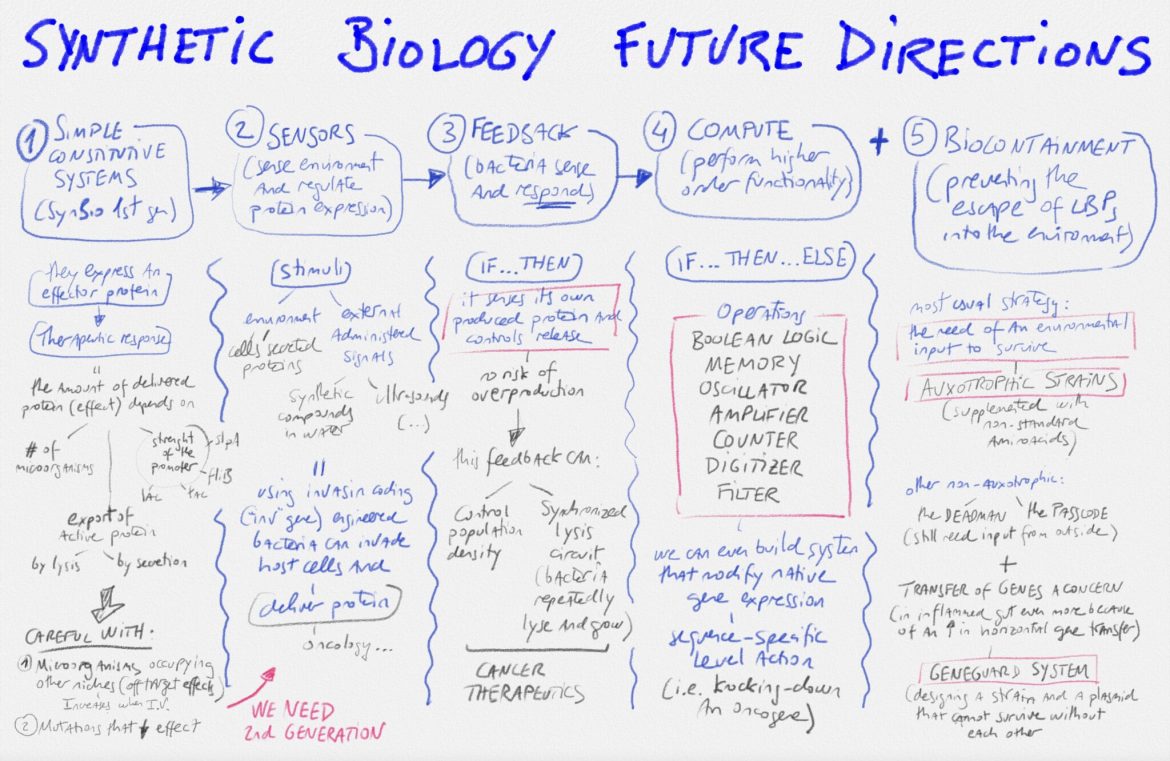
SYNTHETIC BIOLOGY FUTURE DIRECTIONS / Synthetic Biology offers new ways for engineering new biological systems or re-designing existing ones for useful purposes. It is a disruptive technology at the heart of the so-called Bioeconomy, capable of delivering new solutions to global healthcare, but also in many other fields like agriculture, manufacturing, and environmental challenges. Not long ago,

Retinal diseases remain a difficult problem to solve because (1) the retina is in a sense a biological computer that needs to be properly “rewired”, (2) animal models are poor because they have no fovea, (3) the internal limiting membrane (ILM) limits delivery, and (4) regeneration of mammalian retinal is absent. However, very promising strategies

Solving real problems requires commitment and focus. Here’s some advice for scientists willing to become entrepreneurs, six things you should think about before embarking on your journey: (1) UNDERSTAND BIOTECH ECOSYSTEM/ Be aware of what creates and what destroys value, and understand why VCs prefer good problems to solve, big clinical needs, accelerated regulatory pathways

Glioblastoma remains one of the most pressing clinical needs in medicine. Its prognosis is dismal and current standard of care involves maximal safe surgical resection, radiotherapy and chemotherapy. News drugs are on the way though: many groups across the world are trying to solve the challenge. It is indeed a difficult challenge because (1) the

The higher the clinical need and the prevalence, the higher the effort from scientists around the world in trying to solve a problem. Pancreatic ductal adenocarcinoma (PDAC) remains one of the highest unsolved clinical needs today. It is a devastating disease with an unfavorable outcome and is projected to become the second deadliest cancer by
Some advice for scientists willing to become entrepreneurs, here are six things you should think carefully before embarking on your journey… (OPENING THREAD: some slides I used in a lecture @EU_Commission last month) #quick_notes_LP
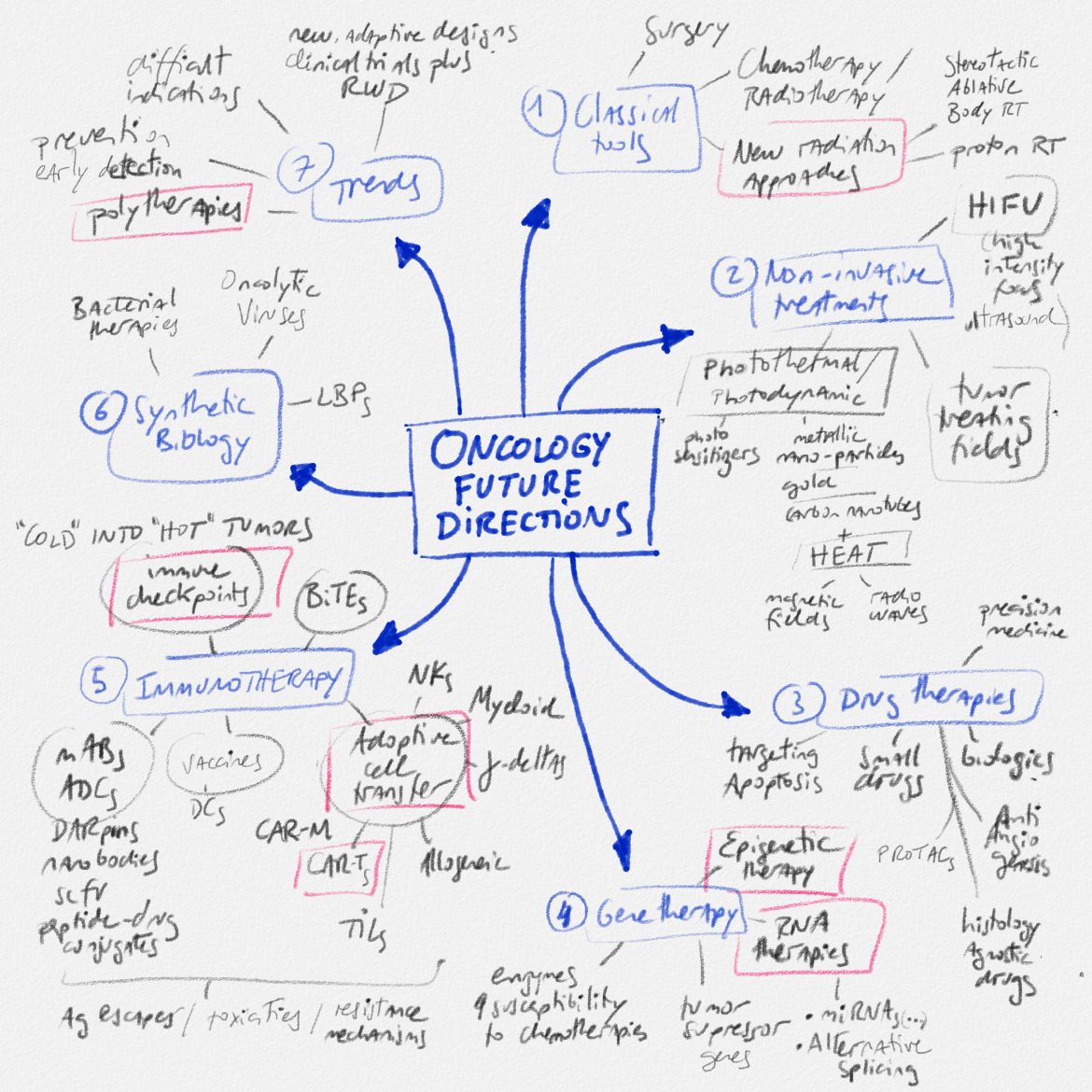
Here’s a map of some of the most promising research fields in oncology today, plus a video —below— with some advice for scientists willing to become entrepreneurs (from a debate on the future of oncology and how to make it happen) #quick_notes_LP
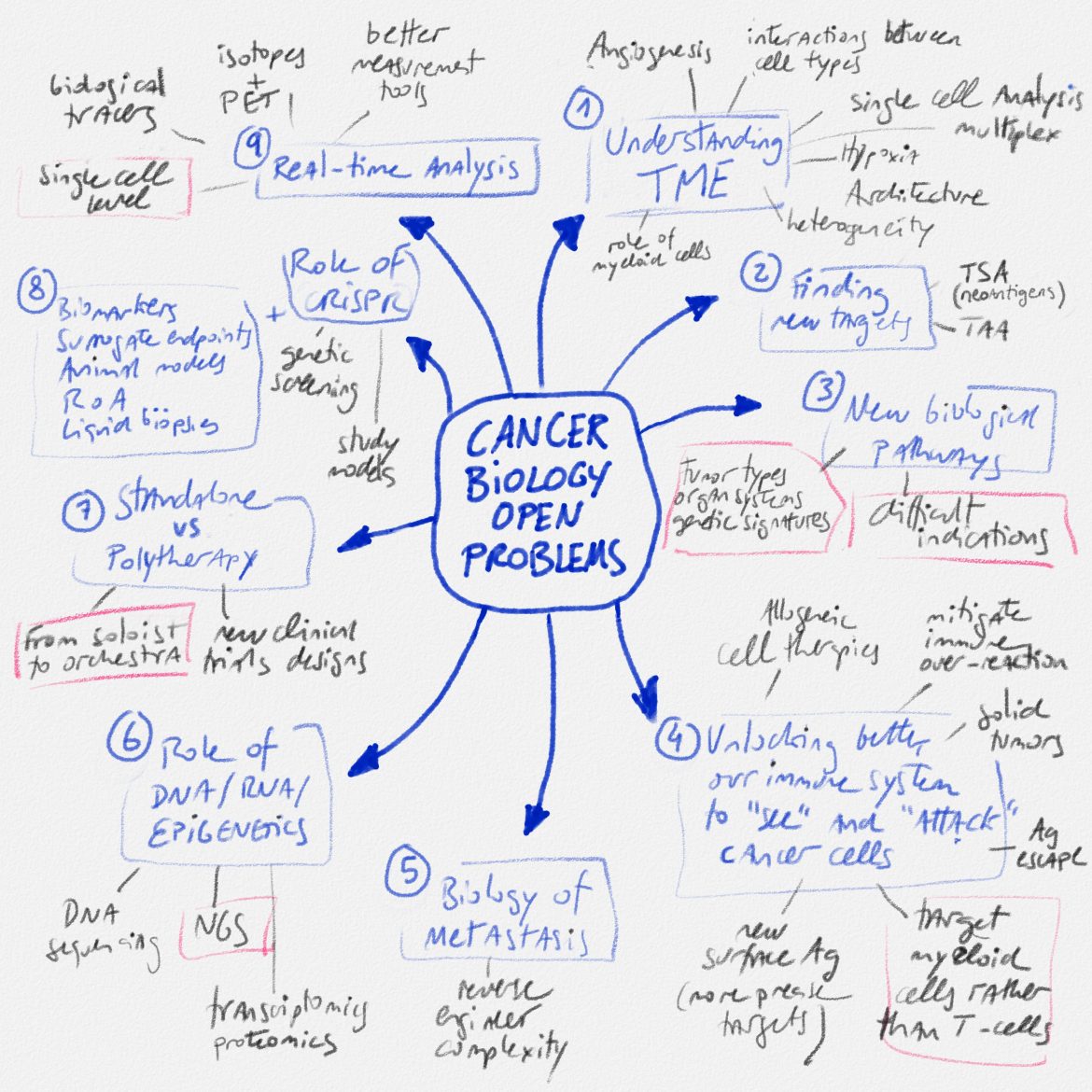
One of the most important things every investor looks for in a startup is a good problem to solve… Unanswered questions always signal what’s next. Here’s a map of some of the most pressing questions in the oncology field today. #quick_notes_LP
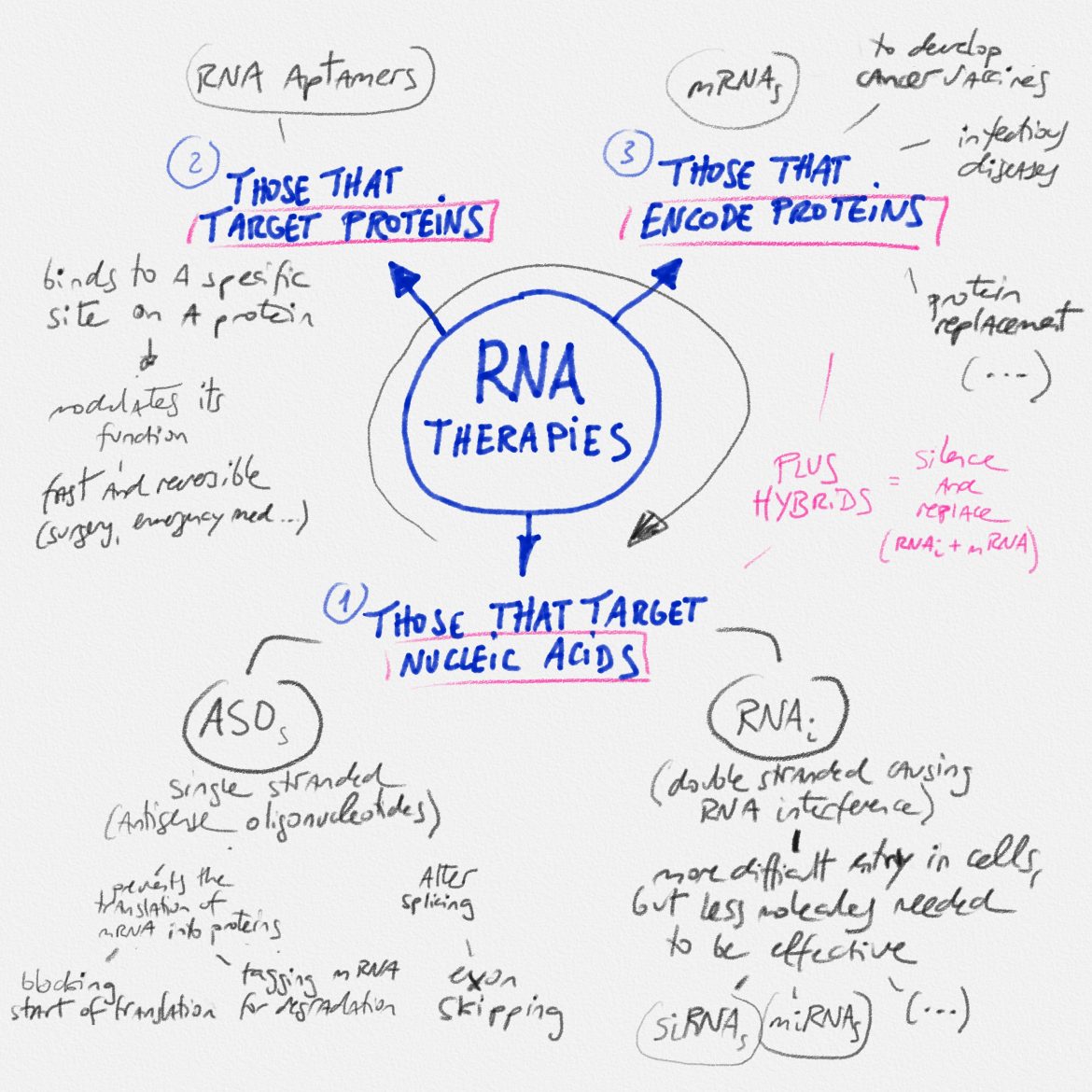
RNAs are very active players in cell biology… they carry instructions for making proteins, turn genes on and off, aid chemical reactions, slice and dice other RNAs, and build proteins. Here’s a simple map to understand how can we use them as drugs #quick_notes_LP

A different view on phase II – III #COVID_19 vaccines, organized on a spectrum ranging from less innovative technology (older, slower, less uncertain development) to more leading edge approaches (faster, riskier) #quick_notes_LP
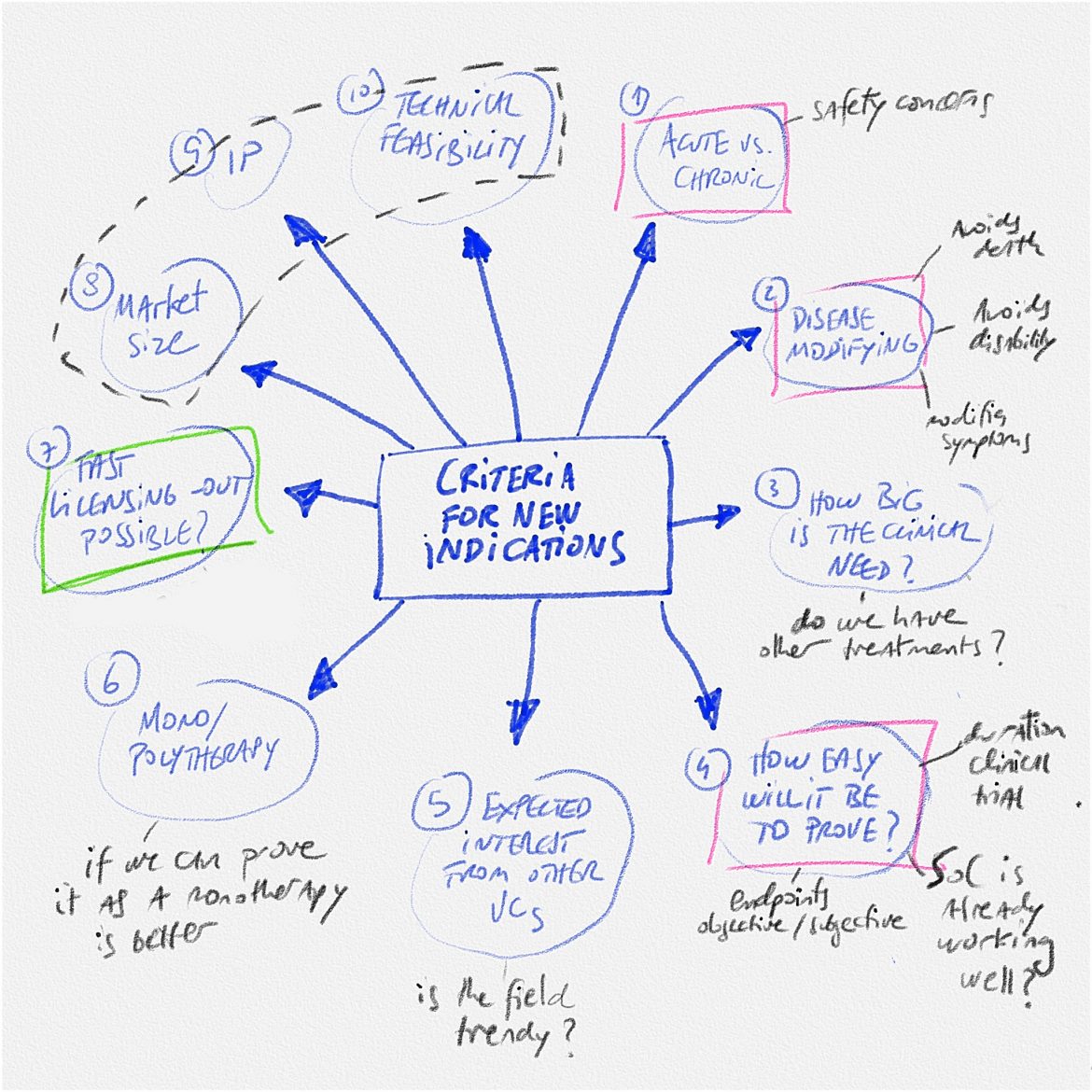
You already have a lead candidate for a first specific indication, here’s a simplified conceptual map on how VCs think to choose the most interesting new indications (pipeline strategy). #quick_notes_LP

Every crisis brings risks and opportunities to the table… here’s a mind map on how SARS-CoV-2 can impact the activities and value chain of the life sciences VC industry #quick_notes_LP

Most rare diseases still lack approved treatments despite major advances in the knowledge of their molecular basis. Here’s a map of the different therapeutic modalities plus an update on some of the most interesting new developments in each field. #quick_notes_LP

The vaccine effort for #COVID19 is unprecedented in scale & speed. To get it right and fast we need new tools and strategies including DNA/RNA vaccines, virus-like particles, T-cell inducing peptides & viral vectors… here’s a map of the leading edge #quick_notes_LP
Fondo financiado por FEDER:


